
 Image 1 of 2
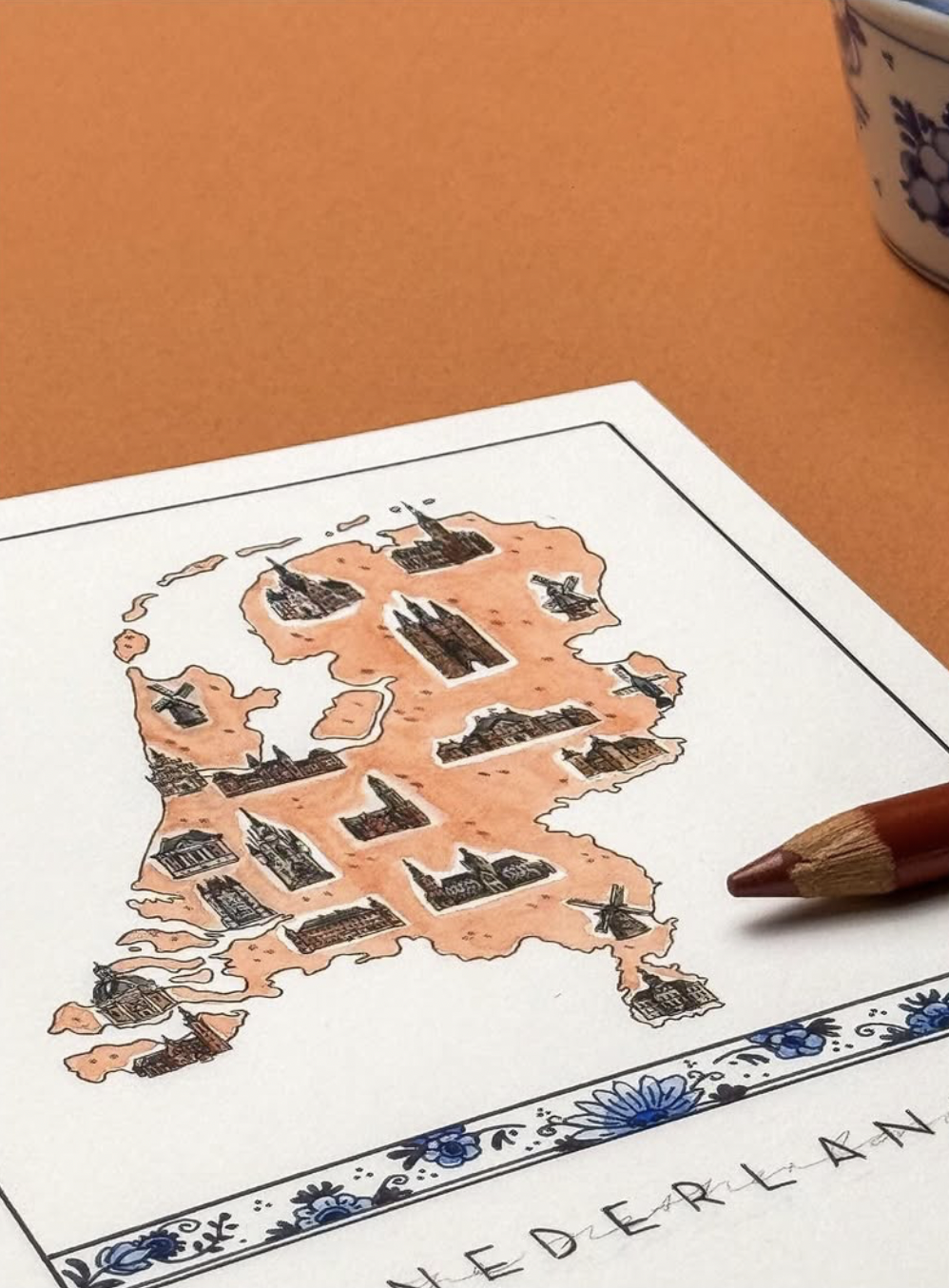 Image 2 of 2
Mini Map Print · 4 × 6 in.
A small illustrated map of the Netherlands, created as part of my collection of maps inspired by the places, objects, and stories that shape our understanding of a place. Printed at 4 × 6 in., it makes a lovely little piece for a shelf, desk, gallery wall, or tucked into a special corner of your home.
Story about the border 📜
These patterns might remind you of Chinese porcelain—and that’s no coincidence. In the 17th century, the Dutch East India Company brought Chinese porcelain to the Netherlands, where it became a coveted luxury during the Dutch Golden Age. Dutch potters began creating their own versions using local clay, sand, and glaze, giving rise to the distinctive blue-and-white Delft Blue pottery. Scenes of everyday life, ships, landscapes, and flowers became common motifs, and the tiles found their way into merchant homes and grand interiors across Europe.
The tradition continues today, with Delftware still being produced in the Netherlands. The pieces I own are from Royal Delft, founded in 1653 and the last remaining Delftware factory from the 17th century. I created this little map as a celebration of the Netherlands and the way trade, craftsmanship, and cultural exchange have shaped its visual identity.
Mini Map Print · 4 × 6 in.
A small illustrated map of the Netherlands, created as part of my collection of maps inspired by the places, objects, and stories that shape our understanding of a place. Printed at 4 × 6 in., it makes a lovely little piece for a shelf, desk, gallery wall, or tucked into a special corner of your home.
Story about the border 📜
These patterns might remind you of Chinese porcelain—and that’s no coincidence. In the 17th century, the Dutch East India Company brought Chinese porcelain to the Netherlands, where it became a coveted luxury during the Dutch Golden Age. Dutch potters began creating their own versions using local clay, sand, and glaze, giving rise to the distinctive blue-and-white Delft Blue pottery. Scenes of everyday life, ships, landscapes, and flowers became common motifs, and the tiles found their way into merchant homes and grand interiors across Europe.
The tradition continues today, with Delftware still being produced in the Netherlands. The pieces I own are from Royal Delft, founded in 1653 and the last remaining Delftware factory from the 17th century. I created this little map as a celebration of the Netherlands and the way trade, craftsmanship, and cultural exchange have shaped its visual identity.